
Plugs and Adapters in Spain: What to Pack (and What Not To)
Spain uses Type F sockets at 230V. Here is exactly which adapter you need coming from the UK, US, or elsewhere — and why a cheap voltage converter is usually a mistake.
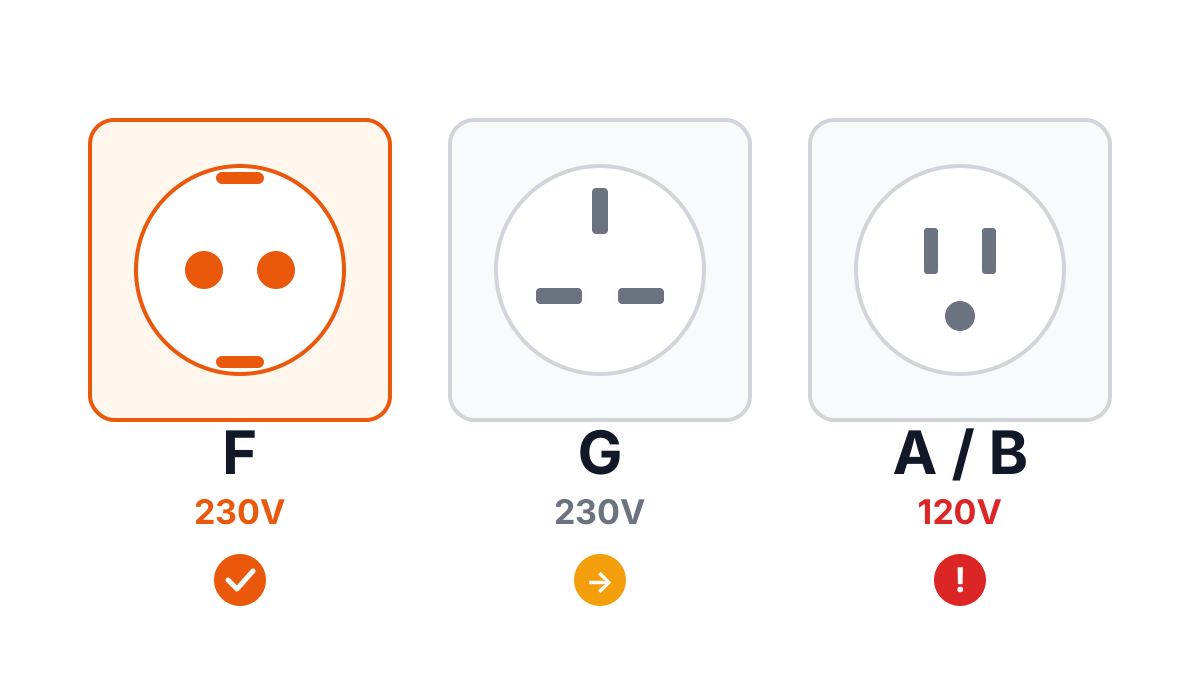
Spain uses Type F sockets at 230V, 50Hz. The good news is that this is the standard across most of continental Europe, so a single European adapter covers Spain, France, Germany, Portugal, Italy and more.
The detail worth getting right is the difference between an adapter and a converter — they are not the same thing, and mixing them up is how travellers destroy their hair dryers.
Adapter vs converter
- An adapter changes the physical shape of the plug so it fits the socket. It does nothing to the electricity.
- A converter (or transformer) changes the voltage itself.
Almost every traveller needs an adapter. Very few need a converter — and buying the wrong one is both wasteful and, with high-wattage devices, occasionally dangerous.
What you need, by country
From the UK or Ireland. You need a Type G to Type F adapter. No converter — the UK, Ireland and Spain all run at 230V, so your devices see exactly the voltage they expect.
From the US or Canada. You need a Type A/B to Type F adapter, and you need to check each device. North America runs at 120V; Spain runs at 230V. Plugging a single-voltage 120V appliance into a Spanish socket will destroy it, sometimes spectacularly.
From elsewhere in continental Europe. Usually nothing at all. Type C and Type F plugs fit Spanish sockets directly.
From Australia or New Zealand. A Type I to Type F adapter. Both regions run at 230V, so no converter is needed.
How to check whether a device is dual-voltage
Read the small print on the charger or the device's rating plate. You are looking for the input range:
INPUT: 100-240V— dual voltage. An adapter is all you need. Essentially all modern phone chargers, laptop power supplies, camera chargers and electric shavers fall here.INPUT: 120Vonly — single voltage. This needs a converter, or it needs to stay at home.
In practice, the single-voltage offenders are almost always heating appliances: hair dryers, straighteners, curling irons and travel kettles. These also draw high wattage, which means the small travel converters sold in airports often cannot handle them anyway. It is genuinely easier to buy a cheap dual-voltage travel hair dryer than to carry a converter capable of running your one from home.
What actually matters more: how many sockets
The thing that catches people out is not the plug shape. It is that a modern traveller charges a phone, a second phone, a laptop, earbuds, a camera and possibly a pocket WiFi hotspot — and a Spanish hotel room may offer two accessible sockets, one of which is behind the bed.
Two options solve this better than a handful of adapters:
- A single adapter plus a multi-port USB charger. One socket, four or five devices. This is usually the lightest solution.
- A short extension lead from home plus one adapter. You plug the adapter into the wall, your own familiar sockets hang off it, and everything charges at once. Slightly bulkier, but it means only one adapter to lose.
A note on older buildings
In older Spanish apartments and rural accommodation you may still find recessed sockets set into a shallow well. Some bulkier adapters — particularly chunky universal ones with sliding pins — do not seat properly in these. A slim, flat European adapter is more reliably compatible than an all-in-one universal block, and it costs less.
Pack one before you fly. Airport adapters are the most expensive adapters in Spain.